Monday, August 9, 2010

Linguine al Branzino

I had some Italian imported tomatoes left in the fridge from yesterday's cooking, and after a bit of thinking, I decided to make use of a fillet of sea bass that I froze a month ago and had to be cooked. I thought the sea bass flesh would be a great way to add texture to a seafood pasta, combined with the richness of the Italian plum tomatoes.

To make this pasta for 2, you will need the following ingredients:
  • 160g linguine
  • 10-15 Italian mini-plum tomatoes
  • 1 fillet of sea bass (one side only)
  • 1 small red onion, chopped finely
  • 2 cloves of garlic, squashed
  • 200ml fish stock
  • some parsley, chopped (reserve the stems)
  • some basil, in long thin slices
  • extra virgin olive oil
  • dry white wine
  • chilli flakes (optional)
  • grated bottarga (optional)

  • Remove the skin from the mini plum tomatoes by making an incision crosswise, boiling them for 30 seconds, and then placing them in ice water. The skin will peel off easily. Halve them lengthwise, drizzle them with some salt and set them aside.
  • With the blade of a knife, scrape off the flesh of the sea bass until you are left with the skin. Chop the meat coarsely and set it aside.
  • Put generous extra virgin olive oil into a large frying pan and when hot, place the fish skin carefully into it, and hold it down with a spatula to keep it straight while it fries in the oil. Turn the other side, complete the cooking and when nicely crisp and bubbly remove from the oil and pat dry with some kitchen paper.

  • In the same oil, place the squashed cloves of garlic and the chopped onion, and fry until golden together with the stems of parsley.
  • Add the chopped sea bass, fry for about 20 seconds and then pour a dash of dry white wine and let evaporate on high heat.
  • Turn off the fire and remove the fish, garlic and parsley stems. Discard the stems and garlic and keep the fish aside.

Pictured: the sea bass frying in the sauce with the parsley stems

  • Cook the linguine into a pot of boiling water, but be prepared to remove them 3 minutes earlier than suggested on the package.
  • In the meantime, pour the stock and chopped parsley into the frying pan and keep over a very low simmer while the pasta is boiling. For extra flavour, I like to dissolve one of the plum tomatoes into this sauce by breaking it down inside the pan.
  • When the linguine are ready, drain them and transfer them into the saucepan.

Pictured: how the sauce looks like when you have added the stock and the pasta is boiling

  • Add 1.3 tsp of salt and stir into the pasta, while you keep it bubbling.
  • Finish off the cooking for about a minute and a half (or until the sock is reduced by 2/3) then add the fish and the plum tomatoes and cover the pan. Let it cook for another minute or so keeping it covered, and remove from the heat.
  • Let the pasta rest for 20 seconds, then serve on a plate pouring some of its sauce on top, then topping with the shredded fresh basil, bottarga, and half of the crispy sea bass skin.

Sunday, August 8, 2010

Spaghetti al Gazpacho

I wanted to experiment a bit with vegetables and tomatoes, for a light, 'summery' pasta that could be enjoyed on a hot day. I decided to experiment with a few types of gazpacho, and then combined it with pasta and fresh Italian imported plum tomatoes (see my other post for where to find them). This pasta is incredibly easy to cook, and besides the Italian imported tomatoes, the ingredients are cheap and available. I was really satisfied with my creation, which brought back memories of when I used to live in Italy. I think it was the combination of full flavoured tomatoes with fresh basil that really did it for me.
This dish could alternatively be served cold, although I haven't tried that yet.

I made a gazpacho from the following:

  • 90g ripe tomatoes
  • 30g red onion
  • 35g red and green peppers
  • 40g cucumber
  • 10g celery (optional)
  • 3 tbsp water
  • 1 tsp balsamic vinegar
  • 1 or 2 anchovies
  • a tiny slice of garlic
  • a pinch of grated Parmesan (optional)
Blend all the ingredients together until smooth, remove excess water through a fine sieve and add salt as needed.

Peel the fresh plum tomatoes from their skin by making an incision, putting them in boiling water for 15 seconds and then immediately in ice water. Season them with salt and set them aside. Boil the pasta and remove it a couple of minutes before its cooking time, then put it into a large saucepan where you have already fried in olive oil a couple of squashed cloves of garlic. Add about 100ml of chicken stock for each 100g of pasta. Remove the garlic, and finish the cooking of the spaghetti in the pan, adding salt as required. Finally, arrange the gazpacho at the bottom of the plate, place the spaghetti in the middle, and top with freshly grated black pepper and thin slices of fresh basil. Arrange the fresh Italian plum tomatoes all around the gazpacho.

Saturday, August 7, 2010

Tippling Club - Lunch

This is my 3rd visit at Tippling club (see my other post), and second one at lunchtime, and I was never disappointed with this place. The spacious and bright counter draws the attention of the diners right onto where the action is, where the desserts and cocktails are prepared, and beautiful dishes are skillfully plated.

The amuse bouche is a beetroot mousse topped with a yogurt crunch. I love everything about this dish, from the way it is presented, to the foaminess of the delicate beetroot mousse and the contrast in texture and flavour with the sour crunchy bits of yogurt.

By the time you remove the foil cover and you unveil this beauty, you will already be salivating.

The scallops in almond gazpacho were also superb. Generous, meaty and juicy scallops were pan fried to perfection and served with sliced grape and a gazpacho of almonds. I thought the combination of that foamy, light gazpacho with the scallops was a brilliant idea.

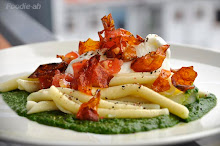
I was less impressed by the main dish, which was a pan fried king fish on a bed of spinach cream, paired with a kombu crunchy cake and seaweed. The dish was pleasant enough, although I didn't find that the composition came all together in the palate. An interesting experiment, although it wouldn't be my first choice.

And with the desserts, the Tippling Club always surprised me. The frozen mandarin foam with dried mandarin was truly exceptional! The orange foam was frozen in nitrogen and had the same texture as a crispy meringue, except it was lighter. The frozen mandarins had an intense flavour and dissolved in the mouth. I would really love to know how they achieved that texture. Overall a very light, flavoursome dessert.


I reviewed the snowball before, but being this my favourite dessert, I don't mind doing it again. This is where frozen, creamy, sparkling, sour, all explode into your mouth. I really have no words to describe this dessert, since every time I have it I devour it within seconds. It is what I would define a true molecular gastronomic masterpiece. Essentially, this dessert is a combination of frozen coconut and sudachi and yuzu curd.

The dessert was complemented by a Parisian fog. This cocktail was Champagne based, and then topped with an Absinthe fog which gave it a subtle aniseed smell and flavour. I must say that Tippling Club serves the best, most innovative cocktails in town. It is a place to go and taste cocktails though, not to get drunk, considering how highly they are priced!

This fixed 3-course lunch menu is priced $55++ per person. I am glad that someone decided to do something different and push the boundaries a little more than most of the other fine dining restaurants in Singapore, and I wish that such sense of initiative will be acknowledged and rewarded by the local diners.

Tippling Club
8D Dempsey Road
Tel: +65 6475 2217
URL: http://www.tipplingclub.com/

Sunday, July 25, 2010

Cooking for the Tays

Most people wouldn't be that keen to cook for friends on their own birthday, but foodies would see it differently... so we ended up arranging a prolonged, 7 course lunch on a Sunday afternoon, the day of my birthday.

I would call this 'flavours of Italy'. What's more typical than a caprese as an Italian starter? This is yet another version. I got the inspiration for this dish when I saw these beautiful Italian tomatoes being sold (for quite a price) at Quattro Stagioni, the Italian delicatessen in Liang Court. When they made me taste one of these tomatoes, it suddenly reminded me of what tomatoes are supposed to taste like. It's sad that there is no local equivalent to this. So I bought 2 tomatoes for each guest and also some luscious burrata to go with them.

I made some basil oil with my homegrown basil, skinned the tomatoes and halved them, chopped the burrata in coarse pieces and arranged it with the halved tomatoes and baby basil leaves on the plate (I used an elongated tile for this). I topped the dish with some Murray river salt, drops of basil oil onto the tomatoes, and a balsamic vinegar reduction. This was probably one of the most memorable capreses I had in years. The tomatoes talked for themselves, and the burrata never fails to surprise. A classic combination of simple but striking Italian flavours. Accompanying wine: a great chilled Cape Mentelle Sauvignon Blanc Semillon 2008.

Going slightly off the Italian theme, this is a dish I saw on the Momofuku recipe book, and it's a more savoury approach to the classic sashimi. I made this edamame paste from dried edamame beans I bought in Japan, which I soaked for 10 hours and peeled off the thin skin one by one. I then blended them with their own boiling water, some soy sauce, sugar and wasabi. The hamachi and chutoro fillets were cured for 3 hours with crushed coriander seeds and szechuan peppercorns, salt and sugar.

One of the most disappointing things is eating sea urchin pasta in any Italian restaurant in Singapore. It's totally pointless. If you are lucky enough that they can cook the pasta, they are still so short and stingy of the sea urchins, to the point that you can't see it and taste it. This was my opportunity to make a proper sea urchin pasta that tastes and feels like it. The creamy uni texture could be distinguished at every bite. Accompanying wine: a Chateau Duhart-Milon 1999. This was an outstandingly smooth and complex wine. Memorable.

These spaghetti contadini are a simple combination of oven dried tomatoes that I prepared in advance with some local tomatoes, some dusted bottarga and freshly grounded pepper. The intense flavour and meaty texture of the tomatoes are what makes the dish work.

This rack of lamb with Gorgonzola sauce was a very successful experiment to introduce an Italian touch to a classic lamb dish. The rack of lamb was seasoned with salt and pepper, pan fried and then cooked in the oven for about 13 minutes. Once coated with mustard, I dusted the lamb into a mix of breadcrumbs, thyme, rosemary, parsley and Pecorino cheese, and cooked it for a further 5 minutes. I made the sauce by deglazing the pan with Marsala wine, adding lamb stock and then a small amount of Gorgonzola. The aroma of the Gorgonzola which was not dominant but stimulating, was unanimously appreciated. The washed our palate with a powerful Italian Barolo Morando 2001.

A classic closure to any Italian meal, a large portion of freshly made (1 day in advance) tiramisu. Mascarpone, savoiardi biscuits, eggs, sugar, coffee and Marsala wine. Some cocoa powder dusted just before serving. Mild, creamy and tempting...
We finished off with a Cape Mentelle Cabernet Merlot 2007, and we called it a night. Thanks to the Tays for the wonderful wines (and wine glasses)!

Sunday, July 18, 2010

Spaghetti alle vongole e crema di broccoli

Spaghetti alle vongole (clams) is an Italian classic. This is a variation to the standard version of this popular dish, which includes the mild flavour of broccoli to achieve a creamier, smoother result. Local clams (pictured below) which you can find in any Cold Storage will work just fine although they are not as tasty as Mediterranean clams. Avoid using cockles for this dish, as they have too strong a flavour and they won't give you the same balanced type of result. The spirit of this cooking technique is to retain as much of the taste of the broccoli and clams as possible, by reusing the same boiling water to boil the spaghetti.

For this recipe, you will need the following:
  • Broccoli
  • Parsley
  • Clams
  • An anchovy
  • Garlic
  • White wine
  • Chilli
Separate the stems of the parsley from the leaves, chop the leaves coarsely and keep the stems. Wash the clams, peel a couple of cloves of garlic and squash them a bit. Fry the garlic cloves in abundant olive oil on a large frying pan, then remove it from the oil. Sprinkle some chilli flakes to taste, then add the clams and cover for a few seconds. Open up again and pour some dry white wine. Make sure that the oil is hot enough when you do that, to allow the wine to evaporate quickly. Cover again and remove from the heat once all the clams are open. Separate the clams from the juice, discard the parsley stems and remove the edible part of the clams.

Bring a pot of water to the boil and cook the broccoli in it for a minute or so, until tender. Remove them from the water, and then put all the shells into the same pot, which you will later use to boil the pasta. With an immersion blender, reduce the broccoli into a smooth cream together with 1 anchovy and some salt. Add some of the boiling water as necessary to get the cream to the right consistency.

Remove the shells from the pot (after a few minutes, once you are done with the broccoli cream), and boil the pasta in the same water. Reheat the clams juice on the same frying pan you used to cook them, drain the spaghetti a minute earlier than their normal cooking time and put them into the pan. Add salt and chopped parsley and let the pasta absorb the sauce, while topping up with some of the boiling water if they start to get too dry. Finish with some freshly ground pepper and the clams.
Serve on a plate with the broccoli cream spread at the bottom and decorate with parsley.

Wednesday, July 14, 2010

Caprese ai tagliolini di mozzarella

You might have seen my previous "rotolone di mozzarella" recipe, which is almost like a sushi roll made from a layer of flattened mozzarella and a filling of raw tomatoes and fresh basil. That recipe suggested the idea that mozzarella could be turned into noodles or to be more specific in Italian terminology, "tagliolini". This is essentially a classic Italian caprese salad, served in a different, modern format.


The procedure is pretty much the same as the rolls. You boil some water, remove it from the fire and bathe the chopped mozzarella in it (approx 2cm cubes) for about 20 seconds or until the cubes are melted enough that they can be molded. Remove the mozzarella from the hot water, put it on a stretched cling film and mold it into a thin sheet (approx 2mm thick), as evenly as you can. Cover both sides in cling film, fold it 2 to 3 times and leave it in the fridge to set for an hour or so.
Remove the sheet from the cling film and with a long knife cut into strips as if you were making tagliolini or soba noodles.

Arrange the noodles into small bowls and decorate with oven dried tomatoes or sun blushed tomatoes and top with fresh pesto (as in the picture) or alternatively a few shredded basil leaves and a bit of olive oil, salt and pepper.

The recipe is fun and easy. I made pesto and tomatoes myself, which is a tedious but rewarding process. It is important that both these ingredients are fresh and of good quality, since that's what really animates this dish.

Friday, July 9, 2010

Baan Rim Pa - Phuket

Baan Rim Pa is without a doubt the most well known upmarket restaurant on the island, enjoying a stable customer influx. The restaurant is constantly fully booked during mid/peak season, but it's easier to get a table without a reservation during low season. I managed to get a wonderful table with a view on a walk-in, but at this time of the year Phuket is extremely quiet.
The sea view from the balcony is one of the best in Phuket, and the restaurant is also well known for its fine wines selection. The question is whether the food is really worth the extra cost, or is it all spent just on the dining experience?

I ordered a pomelo salad ($315 THB), which was served within a beautifully carved pomelo. This was by far the best Thai salad I ever had. The pomelo itself isn't too sweet nor sour, allowing the other flavours to emerge. The seasoning is typical of thai salads, a combination of fish sauce, sugar, lime juice and chilli, but it was rounded by a hint of coconut milk. The mix of textures was great, dominated by the firmness of the pomelo, juicy prawns and crispy fried shallots.

Baan Rim Pa have their own collection of pretty porcelains.

The deep friend fish with lemongrass (645 THB) is a typical dish from Phuket. I tried it elsewhere in the best 'traditional' restaurant of the island, and I can say with confidence that Baan Rim Pa's version is far superior. They achieved such a superb balance of flavours and textures that keeps you asking for more. Thai food is not my favourite, but I would have this dish again and again. If you like lemongrass, this is a must-try.

The fried noodles with creamy sauce and seafood ($265 THB) intrigued me due to the 'creamy sauce' description. In reality, what they defined a 'creamy sauce' was just your normal starchy noodle sauce. Despite that, these noodles were very unique. Imagine lumps of horfun noodles cooked, chopped into chunks while still partially glued together and then pan fried to the point of getting crispy, then topped by a starchy stock-based sauce and mixed seafood. The condiment was good, although nothing you wouldn't get elsewhere in Singapore, but the texture of the noodles was truly unique.

If you are looking for fine Thai cuisine, then Baan Rim Pa is worth paying for, since the food is definitely a level above what you find elsewhere on the streets of Phuket. Prices can be steep for Thai standards, but not prohibitive when compared to Singapore. This meal cost 1,865 THB for two people (approximately $80).

Website: http://www.baanrimpa.com/
Related Posts with Thumbnails